

Breast Reduction & Physical Wellness: A Cosmetic and Functional Surgery That Can Change Your Life
Breast Reduction & Physical Wellness: A Cosmetic and Functional Surgery That Can Change Your Life
Let’s have an honest conversation about a topic that is often misunderstood, sometimes dismissed, but is a daily reality for countless women: the physical burden of disproportionately large breasts.
In the world of Plastic Surgery, procedures are often neatly categorized into “cosmetic” (enhancing appearance) or “reconstructive” (restoring function or normal appearance after trauma or illness). But real life isn’t so neatly categorized. There is a gray area where form and function overlap entirely. Sitting squarely in that intersection is the breast reduction, technically known as reduction mammaplasty.
For many women, large breasts—medically referred to as macromastia—are not merely an aesthetic concern. They are a physical weight that impacts almost every moment of their waking lives. They dictate what you wear, how you move, how you sleep, and, perhaps most importantly, how much pain you endure on a daily basis.
If this resonates with you, it’s important to know that you aren’t alone, the pain is real, and there is a solution that goes far beyond vanity. It’s about restoring your physical wellness and reclaiming your freedom of movement.
To navigate this life-changing procedure, it is crucial to partner with a surgeon who understands both the artistry and the medical benefits of breast reduction. In Northwest Indiana, that expert is award-winning board-certified Plastic Surgeon Dr. Jason Petrungaro. With a deep understanding of the physical toll macromastia takes, Dr. Petrungaro approaches breast reduction not just as a way to improve how you look in a swimsuit but as a vital step toward a healthier, more active future.
The Invisible Weight: Understanding the Physical Toll
Unless you have lived with excessively heavy breasts, it is difficult to truly understand the chronic physical strain they place on the body. We are talking about literal weight—sometimes several pounds of extra tissue—hanging from the chest wall.
The laws of gravity are relentless. This constant downward pull exerts tremendous force on the neck, shoulders, and upper back. Over time, this can lead to chronic, debilitating pain that doesn’t respond to ibuprofen, physical therapy, or chiropractic adjustments.
Many of the patients who walk into Dr. Jason Petrungaro’s office describe a similar constellation of symptoms:
- Grooving in the Shoulders: The most visible sign of the struggle. Bra straps, straining to support the weight, dig deep trenches into the soft tissue of the shoulders, often causing permanent indentations and nerve pain radiating down the arms.
- Chronic Headaches and Migraines: The tension originating in the neck and upper, deeply trap muscles frequently travels upward, leading to tension headaches that can ruin a day.
- Poor Posture: To compensate for the weight on the front of their bodies, women often hunch forward, rolling their shoulders. Over years, this can lead to structural issues with the spine.
- Skin Irritation: The deep fold beneath a large breast (the inframammary fold) is a prime environment for heat and moisture build-up, leading to chronic rashes, yeast infections, and painful skin breakdown (intertrigo).
- Physical Limitations: Perhaps the most heartbreaking aspect is the limitation on life. High-impact activities like running, aerobics, or even just playing actively with children become difficult, painful, or embarrassing due to excessive bouncing.
When a patient presents with these symptoms, Dr. Jason Petrungaro knows that they are looking for more than a “makeover.” They are looking for relief.
The Functional Shift: Why Private Pay Offers More Freedom
Society often views breast surgery through a purely aesthetic lens. Because of this, many women feel guilty for wanting a reduction, fearing it seems vain or self-indulgent. This couldn’t be further from the truth. While a breast reduction will undoubtedly improve the aesthetic appearance of the breasts, another driver for many women is functional improvement—alleviating physical suffering.
This brings us to a crucial point about access to care. While the medical necessity of breast reduction may be true for some patients, navigating the world of insurance to get it covered is often an exercise in frustration. Patients are frequently forced to jump through endless hoops—months of documented physical therapy, letters from chiropractors, specific weight requirements, and arbitrary volume removal mandates. These strict insurance guidelines can sometimes force a surgeon to remove more tissue than a patient wants, leaving them with a shape they didn’t ask for, simply to satisfy a policy code.
Dr. Jason Petrungaro operates differently. To ensure that medical decisions are made strictly between the patient and the surgeon—without interference from insurance adjusters—Dr. Petrungaro does not accept insurance. This is a private pay, out-of-pocket investment in your health.
This model allows for complete freedom in your surgical plan. You don’t have to remove more tissue than you are comfortable with just to meet an insurance quota. You don’t have to wait months for an approval that might never come. Instead, you and Dr. Petrungaro can focus entirely on achieving the best possible aesthetic and functional result for your body, on your timeline. It is an investment in yourself, bypassing the bureaucracy to get straight to the solution.
Dr. Jason Petrungaro is an expert at navigating this duality. As a board-certified Plastic Surgeon, he has the refined aesthetic eye to ensure beautiful cosmetic results. Yet, his approach is deeply rooted in anatomical science and patient wellness. He understands that the goal is to remove enough weight to provide lasting relief from back and neck pain, while simultaneously sculpting a breast shape that looks natural and beautiful on the patient’s specific body frame.
The Procedure: Demystifying the Surgery
The decision to undergo surgery is significant. Fear of the unknown, particularly regarding scars and recovery, often holds women back from seeking the help they need.
During a consultation with Dr. Jason Petrungaro, the veil is lifted. He takes the time to explain the procedure in detailed yet understandable terms, ensuring you feel empowered and informed.
A breast reduction generally involves three main components executed in a single surgery:
- Removing excess tissue: Fat, glandular tissue, and skin are removed to reduce the overall size and weight of the breast.
- Repositioning the nipple-areolar complex: Because large breasts often sag significantly (ptosis), the nipple is usually moved higher on the chest wall to a more youthful, forward-facing position. In 99.9% of breast reduction surgeries performed by Dr. Petrungaro, the nipple remains attached to its blood and nerve supply, preserving sensation and the potential for future breastfeeding (though this cannot be guaranteed).
- Reshaping and lifting: The remaining breast tissue is sculpted and lifted to create a firmer, smaller, and more aesthetically pleasing contour.
It is surgery, and it does involve incisions. However, a skilled surgeon knows how to place these incisions so they heal as discreetly as possible, usually around the areola, vertically down to the breast crease, and along the crease itself (an anchor pattern).
This delicate balance of removing mass while preserving function and creating beauty requires a surgeon with exceptional skill and experience. It is this commitment to excellence that has led the community to vote Dr. Jason Petrungaro as the best Cosmetic Surgeon in Northwest Indiana for two consecutive years, in 2024 and 2025. These accolades reflect a consistent track record of safety, patient satisfaction, and superior surgical outcomes.
The Transformation: Life After the Weight is Lifted
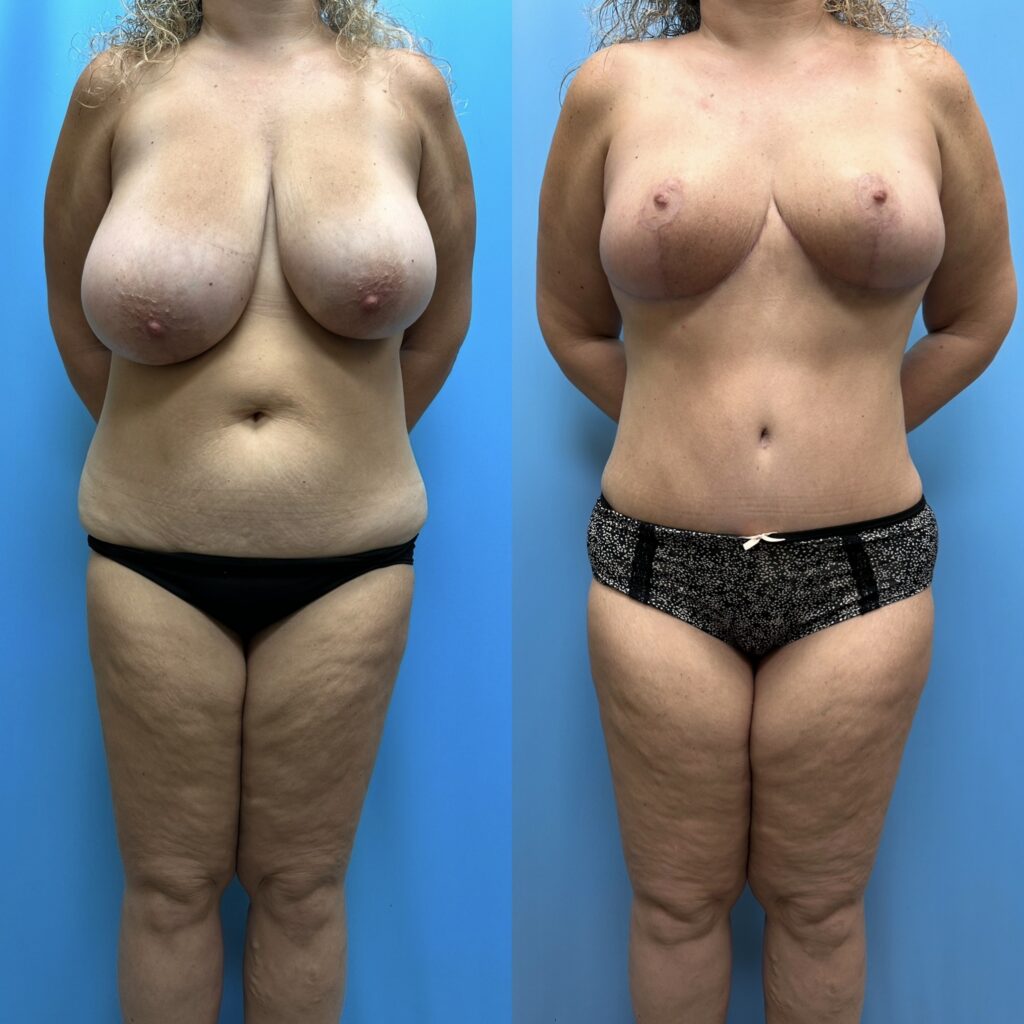
The recovery period for a breast reduction usually involves a few weeks of restricted activity, but most patients report that the surgical discomfort is manageable—and nearly always less severe than the chronic back pain they lived with for years.
The true magic happens as the healing progresses. The transformation is rarely just about cup size; it’s about lifestyle.
The first thing many of Dr. Petrungaro’s patients notice is the silence. The constant, nagging voice of back and neck pain is immediately gone after surgery. They stand taller, not just because their load is lighter, but because their confidence has soared.
Suddenly, physical wellness becomes attainable. Exercise is no longer a painful chore to be dreaded. Going for a jog, joining a yoga class, or hitting the gym becomes enjoyable when you aren’t physically held back by your own body. This often triggers a positive feedback loop—the surgery allows for more activity, which leads to better overall fitness and health.
The simple act of getting dressed becomes a joy rather than a source of frustration. Buying a bra off the rack at a standard store, wearing a fitted button-down shirt without gaps, or putting on a swimsuit without feeling self-conscious are profound milestones in a breast reduction patient’s journey.


Choosing Your Partner in Wellness
If you have spent years researching the connection between your physical pain and your breast size, you likely already know that this surgery could help you. The next, most critical step, is choosing the right surgeon.
You need a surgeon who listens to your goals, respects your anatomy, and prioritizes your safety above all else. You need a surgeon with a proven history of delivering results that change lives.
Dr. Jason Petrungaro’s repeated recognition as the top Cosmetic Surgeon in Northwest Indiana for 2024 and 2025 is not just a plaque on the wall; it is an assurance to his patients. It signifies a practice built on trust, surgical precision, and a deep understanding of how plastic surgery intersects with overall physical and emotional wellness.
Don’t let the weight define your life any longer. If you are ready to explore how a breast reduction can alleviate your pain and open the door to a more active, comfortable future, we are here to help you accomplish your goals. Dr. Petrungaro has performed hundreds of breast reductions. He enthusiastically invites you to check out his work on Instagram (@doctorpetrungaro) and his website, and then schedule a consultation with the expert who understands that this is more than cosmetic surgery—it’s life-changing healthcare.
Frequently Asked Questions
What is breast reduction surgery?
Breast reduction, also called reduction mammaplasty, is a surgical procedure that removes excess breast tissue, fat, and skin to reduce breast size and weight. The remaining tissue is reshaped to create a smaller, more balanced breast contour. For many women, the procedure can address both physical discomfort and aesthetic concerns.
How can breast reduction improve physical wellness?
Large, heavy breasts can contribute to ongoing discomfort in the neck, shoulders, and upper back. They may also make physical activity more difficult and cause problems such as bra-strap indentations and skin irritation beneath the breasts. Reducing breast weight may help relieve some of these issues and make everyday movement more comfortable.
Can breast reduction help with back and neck pain?
Breast reduction may help women whose large breasts contribute to chronic neck, shoulder, or upper-back discomfort. By removing excess breast tissue and reducing the weight carried on the chest, the procedure can potentially make daily activities and movement easier.
Will breast reduction change the shape of my breasts?
Yes. Breast reduction is not simply about removing tissue. The remaining breast tissue is reshaped and lifted to create a smaller and more proportionate contour. Your surgeon can discuss the shape and size that may be appropriate for your individual body frame during your consultation.
Will I have scars after breast reduction surgery?
Breast reduction requires incisions, so some degree of scarring is expected. Depending on the surgical technique and the amount of tissue being removed, incisions may extend around the areola, vertically down the breast, and along the breast crease. Scars generally change and become less noticeable as they heal, although their final appearance varies from person to person.
Does the nipple remain attached during breast reduction?
In many breast reduction procedures, the nipple-areolar complex remains attached to surrounding tissue along with its blood and nerve supply. Dr. Jason Petrungaro states that this is his typical approach in the vast majority of his breast reduction procedures. However, surgical technique depends on individual anatomy, and breastfeeding or nipple sensation cannot be guaranteed.
Can I breastfeed after breast reduction?
Breastfeeding may still be possible after some breast reduction procedures, particularly when the nipple remains connected to its blood supply and underlying tissue. However, the ability to breastfeed successfully cannot be guaranteed. Your surgeon can explain how the planned technique may affect future breastfeeding.
How long does it take to recover from breast reduction?
Recovery varies between patients. Most people need to limit strenuous activities for a period of time while the breasts heal. Your surgeon will provide specific instructions regarding exercise, lifting, work, and other daily activities. Following those instructions can help support a safe recovery.
Is breast reduction considered cosmetic or medically necessary?
It can be either, depending on the individual situation. Some women primarily want to change the size or shape of their breasts, while others seek relief from physical symptoms associated with large breasts. In many cases, breast reduction has both aesthetic and functional goals.
Does Dr. Jason Petrungaro accept insurance for breast reduction?
Dr. Jason Petrungaro’s practice operates on a private-pay, out-of-pocket basis rather than accepting insurance. This allows the surgical plan to be discussed directly between the patient and surgeon without making the procedure dependent on an insurance company’s coverage requirements.
How do I know if breast reduction is right for me?
A consultation with a qualified plastic surgeon is the best way to determine whether breast reduction is appropriate for your goals, anatomy, and overall health. During the consultation, you can discuss your symptoms, desired breast size, surgical options, potential risks, recovery, and expected results.
What should I discuss during a breast reduction consultation?
You may want to discuss the physical problems you experience, your preferred breast size and shape, concerns about scars, nipple sensation, future breastfeeding, recovery time, and your expectations for the procedure. Sharing your goals openly can help your surgeon develop a treatment plan that is appropriate for you.
Can breast reduction make exercise easier?
Reducing breast size and weight may make certain physical activities more comfortable for women who previously experienced discomfort or excessive movement during exercise. Activities such as walking, running, yoga, or strength training may become easier after recovery, although individual experiences vary.
What should I expect from breast reduction results?
Breast reduction results develop as swelling decreases and the breasts continue to heal. The goal is generally to create breasts that are smaller, lighter, and more proportionate to the rest of the body. Final results can vary based on factors such as anatomy, healing, age, weight changes, and surgical technique.
Resources
American Society of Plastic Surgeons – Breast Implant Safety
American Society of Plastic Surgeons – Tummy Tuck
About the Author
Dr. Jason M. Petrungaro, MD, FACS, is a board-certified plastic surgeon and founder of Petrungaro Plastic Surgery, serving Northwest Indiana and the greater Chicagoland area. He earned his medical degree from Indiana University School of Medicine, completed his General Surgery residency at Rush University Medical Center in Chicago, and completed his Plastic Surgery residency at the University of Tennessee Health Science Center. Dr. Petrungaro is a Fellow of the American College of Surgeons (FACS) and has been voted Best Cosmetic Surgery Center by The Times for three consecutive years (2024, 2025, 2026). Read Dr. Petrungaro’s full bio →