

Should You Change Your Breast Implants Every 10 Years?

Should You Change Your Breast Implants Every 10 Years?
If you have breast implants, you have likely heard the “10-year rule.” Perhaps a friend mentioned it, or you read it on a forum years ago: the idea that breast implants have a hard expiration date and must be swapped out precisely once a decade.
For many women, this creates a sense of unnecessary anxiety. It turns a surgical enhancement into a ticking clock, leaving you wondering if your body is harboring an outdated medical device just waiting to cause trouble. As a board-certified Plastic Surgeon, I hear this question during consultations almost every week.
Here is the straightforward, professional answer from my desk here at Petrungaro Plastic Surgery: No, you do not need to change your breast implants every 10 years on the dot.
There is no magical “auto-expire” button that triggers inside your implants when the calendar hits year eleven. However, it is equally important to understand that breast implants are not lifetime devices. They are medical implants, and like any other device in the human body, they have a finite lifespan. While you don’t need a scheduled replacement, you do need a long-term plan.
In this post, we’ll demystify the 10-year myth, discuss why it persists, and walk through the three primary reasons why my patients eventually choose to undergo revision surgery.
Where Did the 10-Year Myth Come From?
If the 10-year rule isn’t a hard medical mandate, why do so many people think it exists?
The confusion stems from historical data and clinical study reporting. In the past, implant manufacturers often used 10-year study periods to track the performance and safety of their devices for FDA approval. Because researchers stopped collecting data at the 10-year mark, the results were often misinterpreted as a “recommended lifespan.”
Furthermore, older generations of implants simply didn’t have the durability of the cohesive gel implants we use today. As technology has improved, implant safety and durability have increased significantly. Modern implants are designed to be stronger and more resistant to wear and tear.
At my practice in Northwest Indiana, I have seen firsthand how much these advancements have improved the patient experience. Today, we view breast implants as devices that will eventually reach a point where they need to be replaced, but that “eventually” looks different for every single patient. In my personal experience, many patients enjoy their results for 15, 20, or even 25 years without issue. Others may experience a change sooner.
The Reality of Long-Term Implant Life
It is helpful to stop thinking of your implants as having an expiration date and start thinking about them in terms of surveillance.
Think of your breast implants like the tires on your car. You don’t automatically replace your tires every 10,000 miles regardless of their condition; you check the tread, you look for cracks, and you pay attention to how the car is handling. You replace them when they are worn out or when safety is compromised.
With breast implants, we monitor them through regular self-exams, check-ups as needed, and diagnostic imaging. If you are asymptomatic and your breasts feel natural and healthy, there is no medical reason to rush into the operating room.
However, over the course of a lifetime, your body changes and the implants inside your breasts do too. Eventually, you will likely encounter one of the following three scenarios that prompt a conversation about removal or replacement.
1. If Your Implants Rupture
While modern silicone implants, such as the Natrelle Inspira brand I exclusively use, are made with a highly cohesive “gummy bear” gel designed to stay in place even if the shell is compromised, a rupture is still a clear indication for surgery.
- The Data: In the 10-year Allergan Core Study for primary (first-time) augmentation patients, the cumulative rupture rate in the MRI screening cohort was 9.3%. It is important to remember that these studies use advanced imaging to find even “silent” ruptures—tiny tears that often cause no symptoms and aren’t visible to the naked eye.
- The Diagnostic Standard: It is vital to know that routine breast imaging is not one-size-fits-all. Mammograms cannot diagnose a ruptured implant. Because mammograms are designed to screen for breast cancer, they are not optimized to visualize the internal integrity of an implant shell. At this time, the only accepted, reliable tests for detecting implant rupture are an MRI or an ultrasound.
- Recommended Surveillance: To stay proactive, both the FDA and our leading Plastic Surgery societies recommend that you obtain an MRI or an ultrasound of your breast implants 5 years after your initial implantation and then continue with routine screenings every 3 years thereafter. This protocol allows us to identify any issues early, even before you feel a physical change.
- What should I do? If you suspect a rupture or if an imaging test confirms one, I will recommend an implant exchange. While a rupture is rarely a surgical emergency, it is a reason to schedule your replacement surgery to avoid potential inflammation or changes in the surrounding tissue.
2. If You Develop Capsular Contracture
Your body is incredibly intelligent. When you have surgery, your immune system naturally creates a thin, protective layer of scar tissue around any foreign object placed inside it. This is called a capsule.
In most cases, this capsule is soft and invisible. However, in some women, this scar tissue begins to tighten, harden, and squeeze the implant. This is known as capsular contracture.
- The Data: The 10-year Natrelle Core Study reported a cumulative capsular contracture rate (specifically for Baker Grade III/IV, which are the more severe grades) of 18.9% for primary augmentation patients. I take specific surgical steps—including careful tissue handling and modern placement techniques—to minimize this risk, but it remains a biological reality that some patients experience.
- How do I know? You will feel it. The breast may start to feel firmer than usual, or you may notice that the breast shape is becoming distorted—perhaps the breast sits higher on your chest, or it feels tight and uncomfortable.
- What should I do? Capsular contracture is a common reason for secondary breast surgery. If the contracture is mild, sometimes massage or medication can help. But if it progresses to the point of discomfort or cosmetic distortion, the standard treatment is to undergo a capsulectomy (removing the scar tissue) and an implant exchange.
3. Cosmetic Changes: The “Touch-Up”
The third, and often the most common, reason my patients seek implant replacement isn’t because of a medical problem, but because of a desire for an aesthetic update.
We often forget that while our implants stay the same size, our bodies continue to evolve. Over 10, 15, or 20 years, many factors can change the look of your breasts:
- Pregnancy and Breastfeeding: These life events cause significant shifts in breast volume and skin elasticity.
- Weight Fluctuations: Significant weight loss or gain can alter how your implants sit on your chest wall.
- Aging: As we age, our skin naturally loses elasticity. This can lead to sagging (ptosis), which may make the original implant placement look different than it did years ago.
Many women decide that if they are going to have surgery to correct sagging with a breast lift (mastopexy), it is the perfect time to address their implants as well. You might choose to:
- Change the size: You may feel that your lifestyle or aesthetic preferences have changed, and you want something smaller or larger.
- Change the profile: If you want a more natural shape, you might switch from a high-profile round implant to a different style or a different type of gel.
- Combine with a lift: If your natural breast tissue has drifted downward, a breast lift can tighten the skin and reposition the nipple, restoring a youthful contour while keeping or refreshing the implants.
Why Choose Petrungaro Plastic Surgery?
Breast augmentation and revision surgery are among my greatest passions. I believe that every patient deserves a personalized approach that accounts for their unique anatomy, lifestyle, and aesthetic goals.
When you choose a surgeon, you aren’t just choosing a medical professional; you are entering into a long-term partnership regarding your health and self-image. That is why I am so proud of the reputation we have built here in Northwest Indiana. It is a distinct honor to have been named the Best Cosmetic Surgery Center in Northwest Indiana for three years in a row—2024, 2025, and 2026.
This recognition is a testament to the trust my patients place in me. With hundreds of 5-star patient reviews, I strive to ensure that every person who walks through our doors feels heard, respected, and deeply satisfied with their results. Whether you are looking for your initial breast augmentation or seeking a revision to address a previous surgery, I take the time to listen to your concerns and formulate a plan that makes sense for you.
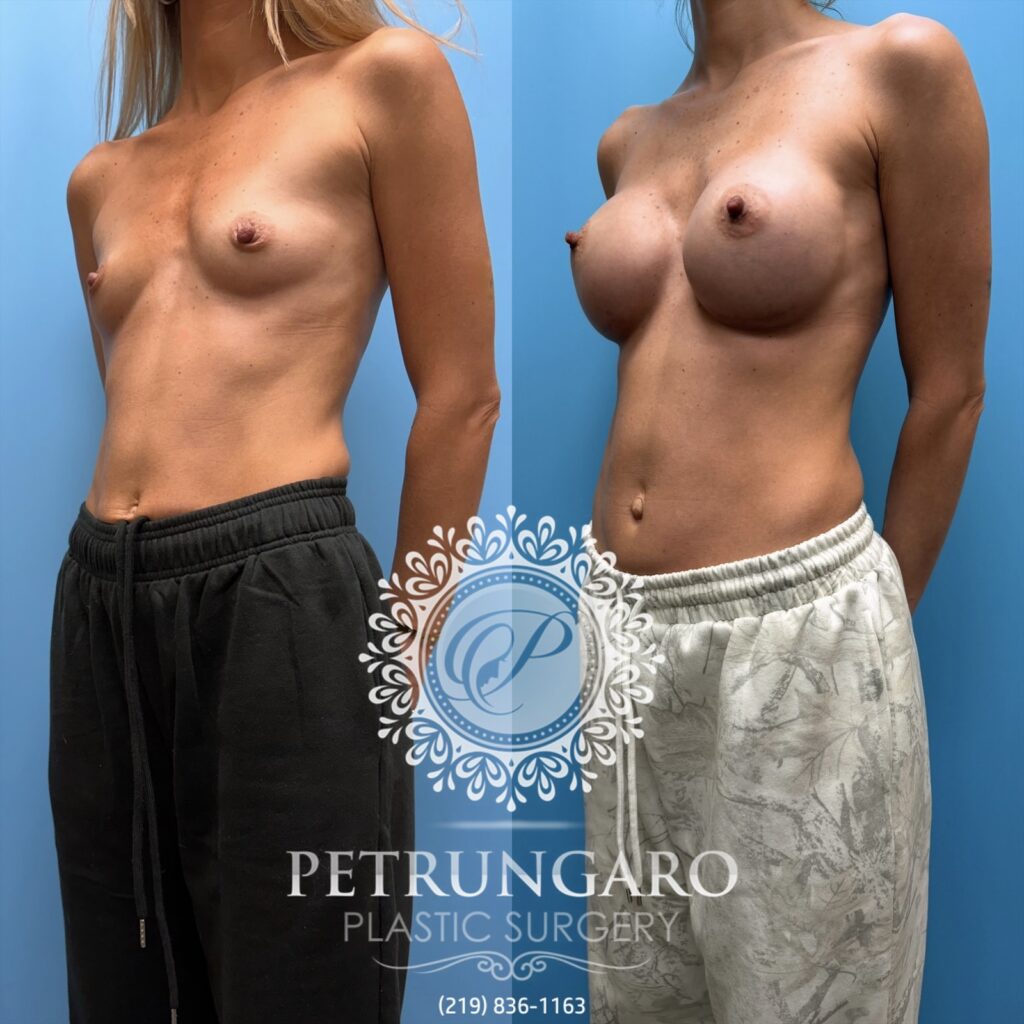
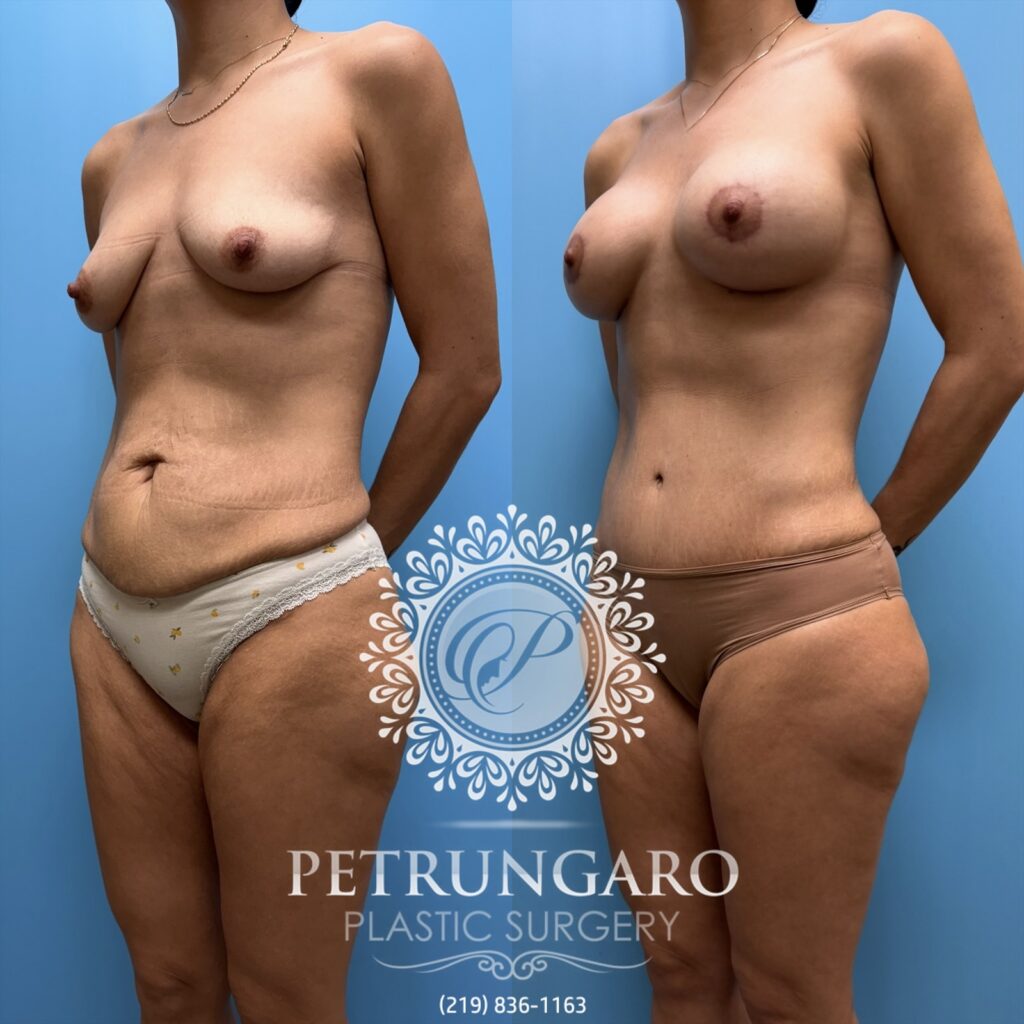
If you are curious about what is possible, I encourage you to browse our results. We have hundreds of before-and-after photos on my website and Instagram profile. Seeing the actual journeys of patients with similar anatomies is often the most helpful way to get a realistic sense of what we can achieve together.

Taking Control of Your Breast Health
The most important takeaway is that you are the captain of your own ship. You don’t need to fear the 10-year mark, but you should respect the fact that you have an ongoing relationship with your breast implants.
Here is my recommended action plan for the long term:
- Stay Informed: Keep a record of your implant brand, size, and serial number. My team ensures every patient walks away with their specific device documentation, and I rely exclusively on high-quality Natrelle Inspira implants for my patients.
- Know Your Normal: Perform regular self-exams. Get to know how your breasts feel. When you know what is “normal” for you, you will be the first person to notice if something feels different, firmer, or irregular.
- Build and Maintain a Relationship with a Board-Certified Plastic Surgeon: You don’t need to see a surgeon every year, but having a trusted professional you can call with any issues is invaluable. If you have moved to the Northwest Indiana area or are looking for a new partner in your surgical care, I am always happy to consult with you.
- Schedule Your Imaging: Adhere to the recommended 5-year and then 3-year interval schedule for MRI or ultrasound screenings to ensure your implants remain in good standing.
- Listen to Your Body: If you feel discomfort, notice a change in shape, or simply feel that your implants are no longer meeting your goals, schedule a consultation.
Final Thoughts
The decision to replace your implants is entirely personal. For some of my patients, it happens after 12 years because they want a size change. For others, it happens after 20 years due to a minor capsule issue. For many more, they will happily keep their implants for decades without ever requiring a revision.
Do not let the myth of the 10-year deadline dictate your health choices. Instead, focus on proactive, patient-centered care. When you treat your breast implants as a long-term commitment that requires occasional “check-ins,” you can enjoy your results with confidence, peace of mind, and total control over your body.
If you have had your implants for over a decade and are curious about their current state, or if you are considering a change for any reason, reach out to me, Dr. Jason Petrungaro. We would love to have you in the office for a clinical exam, where we can discuss your goals and help you determine if a revision is the right choice for your specific needs.